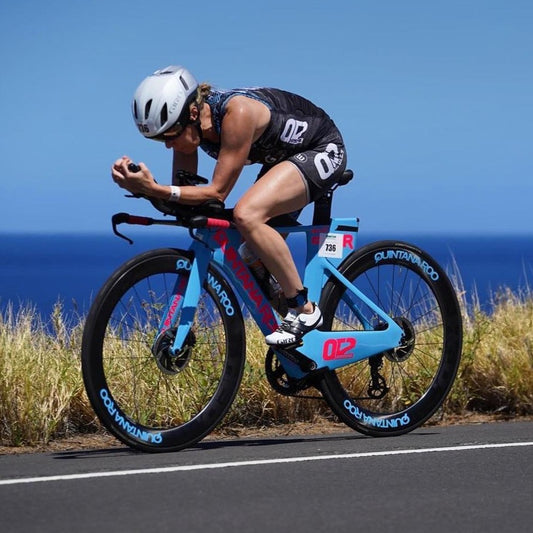
Brick
as Default
Most athletes treat brick training as a special event — a long, demanding session done a handful of times before a race. We don't. At QT2, the brick isn't an occasion. It's just how the week is built.
Ask most triathletes about their brick sessions and they'll describe something specific. A long ride followed by a run. Usually long. Usually hard. Usually done a few times in the months before an A race and treated as a kind of simulation — a preview of race day, compressed into one brutal afternoon.
That's one way to do it. It's not ours.
The problem with treating the brick as a special event is that it creates an event-sized training stress. A long, hard bike followed by a hard run off the bike is a significant load. Recovery from it takes days. Do it too close to peak training and you've just spent a week digging out of a hole instead of building fitness. Do it too far out from race day and the specificity value diminishes. And in between those two sessions, your legs have mostly forgotten what it feels like to run off the bike — so the next brick is almost as jarring as the first.
There's a better model. And it starts with a simple reframe.
"The brick isn't a session. It's a habit. When it becomes the default structure of the training week, it stops being something you prepare for and starts being something your legs just know how to do."
The Problem With How Most Athletes Brick
Two things go wrong consistently. The first is pacing. Athletes run their brick runs too fast — particularly when training for IRONMAN. They finish a long ride, lace up their shoes, and head out at a pace that feels satisfying but has nothing to do with what they'll actually be able to sustain after 112 miles on race day. The brick run becomes a confidence-building exercise rather than a training tool. It feels good in the moment. It doesn't prepare the body for the reality of what's coming.
The pace you run off a 2-hour training ride is not the pace you'll run off a 5.5-hour IRONMAN bike leg. These are not the same physiological event. Training the brain to associate the brick run with a faster, fresher pace is actively counterproductive. The legs need to learn patience. The mind needs to accept that the run off the bike is supposed to feel like bricks — and that holding back early is the only way to run well late.
The second problem is volume. Athletes build these massive brick sessions — four-hour ride into an hour run, or longer — that generate training stress approaching a race itself. The body then has to spend the next several days recovering from a session that was never intended to be a race. The week gets compromised. The next quality session suffers. The athlete ends up doing a lot of medium-hard work instead of the polarized distribution that actually builds fitness.
Brick as Default
The reframe is this: stop thinking about a brick session and start thinking about being in a constant state of running off the bike.
In a well-structured training week, there are multiple days where a ride and a run both appear on the schedule. Many athletes do those sessions separately — ride in the morning, run in the evening, or ride one day and run the next. That's a missed opportunity. When the ride and run can be done sequentially without compromising the quality of either, they should be. Not always. Not at the expense of key run sessions. But as a default, when the option exists, run off the bike.
What this looks like in practice: a key ride on Tuesday followed by an easy run gets done as a brick. A quality ride on Thursday with an easy run — brick. The run is short. It's easy. The legs feel like bricks for the first few minutes, and then they find their rhythm. That sensation becomes familiar. Over weeks and months of this, the transition from bike to run stops being a shock and starts being a known quantity.
The important distinction: on days where the run is the quality session, we don't make it a brick. A key run preceded by a ride is likely to result in a compromised key run. The integrity of the run has to be protected. Brick as default applies to days where the run is secondary — easy, short, supplementary. Those are the days to stack it.
The Weekend Is One Massive Brick
The most under-appreciated brick in the training week isn't any single session. It's the back-to-back weekend structure.
Saturday: long ride, short easy run off the bike. Sunday: easy short ride, long run. Two brick days in a row. The Saturday session doesn't just prepare the legs for Saturday's run — it creates the residual fatigue that makes Sunday's long run exponentially more valuable as a race-specific stimulus.
When an athlete does their long run on Sunday morning, they're doing it carrying the accumulated cost of Saturday's long ride and brick run. The legs are not fresh. The glycogen stores are partially depleted. The neuromuscular system is already carrying some load. And the athlete has to run long anyway — at realistic effort, in control, managing fatigue rather than running through it.
That is exactly what the back half of an IRONMAN marathon demands. You don't get to start the run fresh. The race has been going on for six or seven hours before the run shoes go on. Training the body and the mind to perform under that kind of accumulated fatigue is one of the most specific adaptations you can build. And the back-to-back weekend brick builds it week after week, without requiring a single heroic standalone brick session to do it.
The Fueling Component — Don't Skip It
This is where brick training earns its full value, and where most athletes leave it on the table.
If you're doing a brick, you don't get to skimp on bike fueling because it's a training ride. The brick is a fueling rehearsal as much as it's a physiological one. The bike is where your nutrition plan gets tested — where you find out whether a particular product sits well at intensity, whether your timing is right, whether your gut can handle what you're asking it to handle. A brick session where you under-fueled the bike teaches the body nothing useful about race day. It just makes the run feel worse for the wrong reasons.
Fuel the bike in training the way you intend to fuel it in the race. Every brick is a chance to refine that plan, troubleshoot it, and build the gut's tolerance for higher intake rates. By the time race day arrives, the fueling plan should feel boring — something you've done dozens of times without incident.
And then there's T2. In a race, T2 is where you take a gel before heading out on the run — a small but meaningful deposit into the tank at the exact moment the run's carbohydrate demand begins. In training, the equivalent is taking that gel before you head out the door for the brick run. In your kitchen. In your garage. Wherever you're transitioning from bike to run shoes.
It sounds minor. It isn't. It builds the habit. It means that on race day, reaching for a gel in T2 is automatic — not something you have to remember under stress. It also sets the tone for fueling early in the run, which is one of the most common places athletes let intake drop off right when the burn rate is at its highest.
Every brick run should begin with a gel. Not after you've been running for a mile and remembered. Before you leave. At the moment you transition. If you can't build the habit in training, don't expect to execute it cleanly under race stress. The brick is where habits get installed.
Specificity as the Season Progresses
The brick-as-default structure is a year-round principle, but it evolves as the race approaches. In base and build phases, the brick sessions are about frequency and familiarity — short, easy run legs done consistently to keep the transition feeling routine. The stress is low. The purpose is repetition.
As the athlete moves into specificity — the final weeks before the A race — the weekend brick begins to more closely reflect race demands. The intensities get more specific. The run off the bike starts to look like what the athlete will actually be asked to do on race day, not a comfortable easy shuffle. The pacing conversation shifts from "keep it controlled" to "this is what your race pace should feel like off the bike." The goal is still not to simulate the full race in training. It's to make the race-specific sensations familiar enough that they don't surprise the athlete on the day that matters.
Base / Build: Brick as structural default — short, easy run legs stacked onto rides wherever possible. Frequency over intensity. Building the habit and the neuromuscular familiarity.
Build / Race Prep: Weekend brick intensities begin to reflect race effort more closely. Run pacing becomes a deliberate conversation. Fueling execution gets more specific.
Specificity: The weekend brick is as race-specific as training gets. Pacing, fueling, and transitions all reflect race-day expectations. By this point, the brick shouldn't feel foreign — it should feel familiar enough to be boring.
What This Looks Like Over Time
The adaptation that comes from bricks-as-default isn't dramatic in any individual session. That's the point. No single brick changes everything. What changes is the cumulative effect of dozens of low-key transitions over the course of a season. The legs learn what it feels like to run off the bike. The body learns to start the run at a controlled effort rather than reacting to the unfamiliar sensation with a surge it can't sustain. The fueling habits get ingrained. The T2 gel becomes reflexive.
By the time race day arrives, an athlete who has been 'bricking as default' since January isn't doing something new when they rack the bike and lace up the running shoes. They've done it dozens of times. The legs know what to expect. The mind knows what to expect. The only thing left is to execute the plan — at realistic pace, with a full stomach, on legs that are tired but familiar with being tired.
That's what the brick is actually for. Not the occasional epic training day. The quiet, consistent accumulation of a transition that works.
Stop treating the brick as a special event. Start treating it as the default structure of any training day that has both a ride and a run on the schedule. Keep the run short. Keep the effort honest. Fuel the bike properly every time. Take the gel before you head out. Do the back-to-back weekend and let Sunday's long run do its work on legs that have already been through something.
Over time, the transition stops being a shock and starts being a known quantity. That's the adaptation. And it's built one quiet, unremarkable brick at a time.
The brick isn't an event. It's a habit. Build it accordingly.
A training week built around the right structure makes the race feel familiar.
QT2 coaches build brick-as-default into every athlete's training week from the start — not as a special occasion, but as the foundation of race-specific preparation. If your current plan treats bricks as events, there's a better way.